
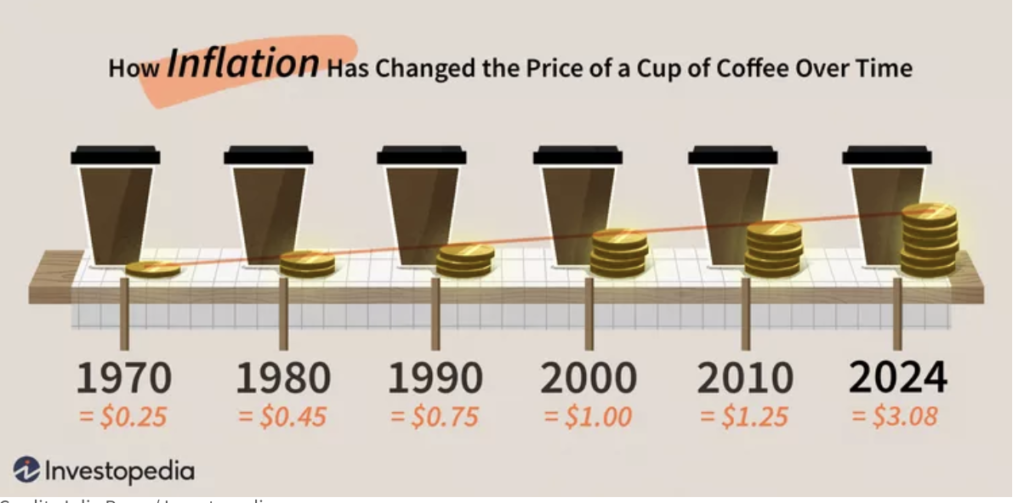
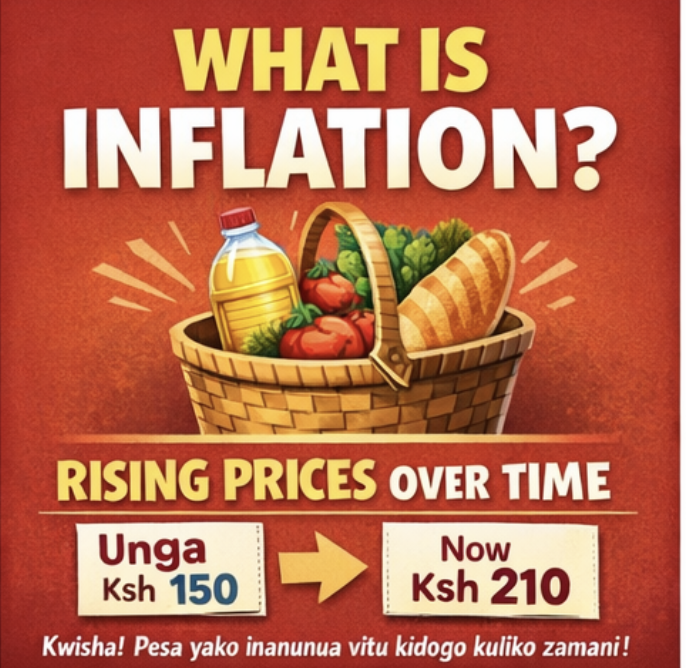
Inflation is not just an economic statistic, it is something every Kenyan feels daily.
When unga rises, when matatu fares increase, when rent goes up, that is inflation at work.
But behind the scenes, the Central Bank of Kenya (CBK) measures inflation in a more sophisticated way to understand what is really driving prices.
They break it into two key components:
- Core inflation,
- Non-core inflation.
Understanding this distinction is critical, not just for economists, but for the mwananchi trying to survive rising costs.
How Kenya Measures Inflation (CBK Approach)
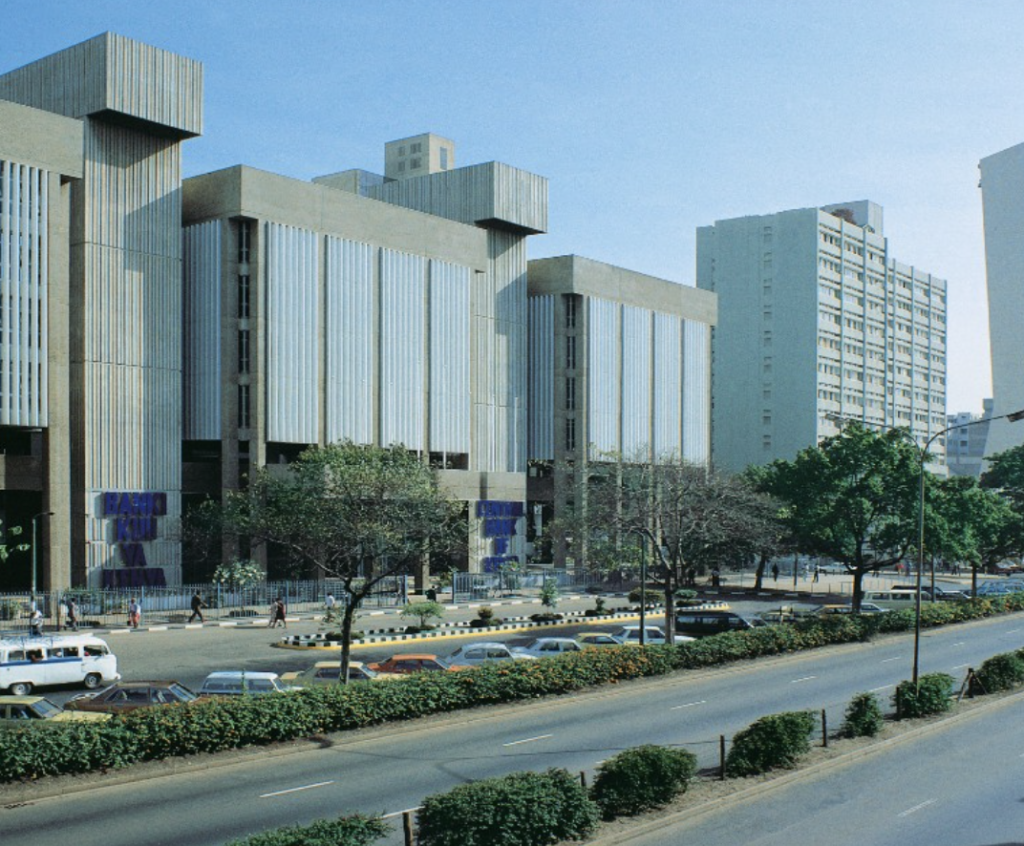
1. Headline Inflation (The Big Number You Hear)
This is the overall inflation rate reported monthly. Example, Inflation was about 4.4% in early 2026 (Central Bank of Kenya).
This includes everything:
- Food
- Fuel
- Rent
- Transport
- Clothing
But here’s the issue; not all price changes are equal.
2. Core Inflation (The Stable Part of Inflation)
What is Core Inflation?
Core inflation:
- Excludes food and fuel.
- Focuses on long-term, stable price trends.
According to CBK:
- Core inflation was around 2.1% – 2.2% in early 2026.
It represents about 81% of the inflation basket.
Why CBK Focuses on Core Inflation:
Because:
- Food prices depend on weather,
- Fuel prices depend on global oil markets.
These are outside CBK’s control
So CBK uses core inflation to decide:
- Interest rates
- Monetary policy
Kenyan Examples of Core Inflation
- Rent increases in Nairobi
- School fees adjustments
- Prices of processed goods (e.g., bread, flour)
- Haircuts, mobile services
Impact on the Mwananchi
Core inflation reflects:
- The true long-term cost of living.
If core inflation rises:
- Rent increases
- School fees rise
- Services become expensive
This is the kind of inflation that:
quietly reshapes your lifestyle over time
3. Non-Core Inflation (The Volatile Reality Kenyans Feel Most)
What is Non-Core Inflation?
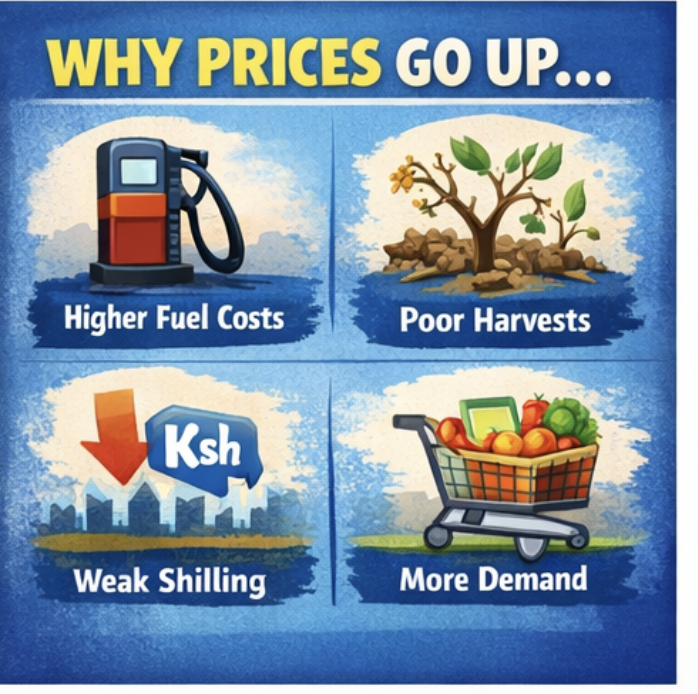
Non-core inflation includes:
- Food, and
- Fuel.
These are:
- Highly volatile
- Seasonal
- Often unpredictable
CBK MPC Insight (2026); From recent MPC data:Non-core inflation was around 10.1% – 10.3%. That is more than 4× higher than core inflation.
What Drives Non-Core Inflation in Kenya
According to CBK:
- Weather (rain/drought)
- Food supply
- Global oil prices
- Exchange rate
Real Kenyan Examples
- Sukuma wiki prices rising by over 25%
- Cabbage increasing by over 40%
- Tomatoes fluctuating weekly
Impact on the Mwananchi
This is the inflation people feel immediately:
- Food becomes expensive overnight.
- Transport fares change suddenly.
- Household budgets collapse.
Why the Difference Matters?
Here is the key insight from CBK:
| Type | What it Shows | Stability | Impact |
|---|---|---|---|
| Core Inflation | Long-term trend | Stable | Slow but lasting |
| Non-Core Inflation | Food & fuel | Volatile | Immediate and painful |
Critical Insight from CBKs – MPC
Even when:
- Core inflation is low (~2%).
- Overall inflation is stable (~4–5%).
Non-core inflation can still be very high (~10%).
What This Means for Monetary Policy
The Central Bank of Kenya makes decisions like, raising or lowering interest rates based mainly on Core Inflation. Why?
Because:
- Interest rates cannot control rain.
- Interest rates cannot control global oil prices.
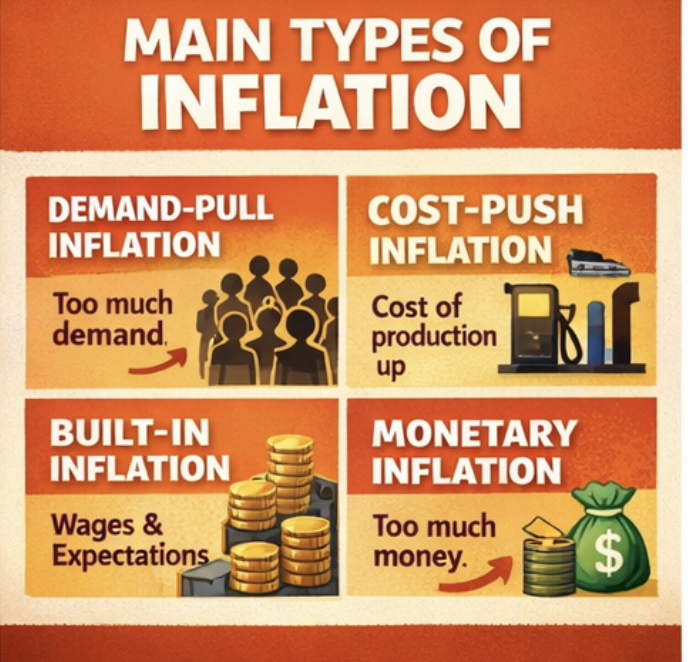
Connecting This to Types of Inflation
Now let’s link this to the text book types of inflation:
Demand-Pull Inflation
- Reflected mostly in core inflation
- Example: Increased spending → higher rent, services
Cost-Push Inflation
- Seen strongly in non-core inflation.
- Example: Fuel price increases → transport costs rise.
Built-in Inflation
- Appears in core inflation.
- Example: Wage increases → businesses raise prices.
Monetary Inflation
- Influences both core and overall inflation.
The Kenyan Reality: Why Inflation Feels Worse
Here is the truth: CBK sees core inflation (~2%) → stable economy.
Mwananchi feels non-core inflation (~10%) → maisha imekuwa ngumu!
This disconnect explains:
- Public frustration
- Wage pressure
- Economic stress
How It Affects the Mwananchi (Final Breakdown)
1. Food Pressure (Non-Core)
- Daily suffering
- Immediate impact
2. Rent & Services (Core)
- Long-term financial strain
3. Income vs Cost Gap
- Salaries don’t adjust fast enough
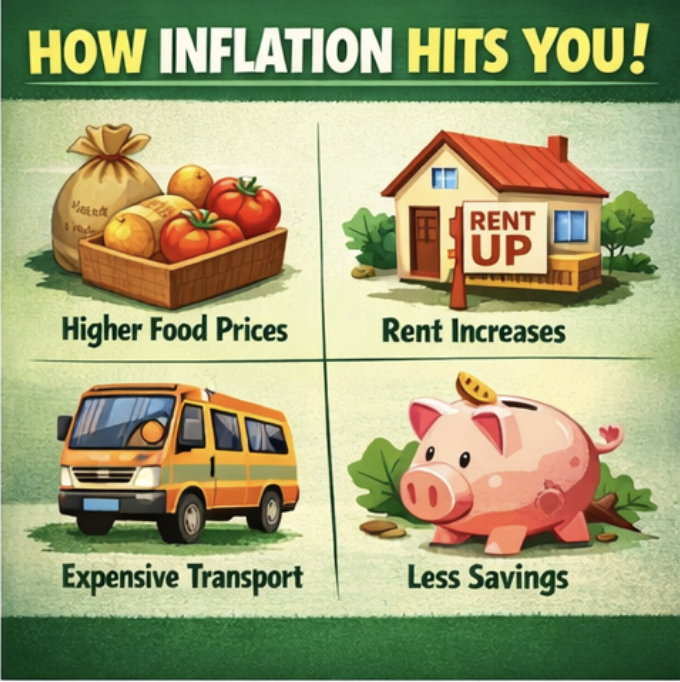
4. Financial Decisions Become Harder
- Save less
- Spend more on basics
Golden Insight (For Your Audience)
Inflation in Kenya has two faces: one that economists watch (core), and one that wananchi feel every day (non-core).
Leave a Reply