
In 2025, Kenya’s banking sector did something historic. It did not just grow.
It exploded into record profitability.
At the center of this surge were five dominant institutions:
Equity Group Holdings, KCB Group, Co-operative Bank of Kenya, NCBA Group, and Absa Bank Kenya.
Together, they defined the financial heartbeat of East Africa’s largest economy.
The Numbers: A Sector at Peak Strength:

The scale of performance is not speculative, it is measurable and historic:
- Equity Group: KSh 75.5 billion profit (+55%).
- KCB Group: KSh 68.4 billion (+10.6%).
- Co-op Bank: KSh 29.8 billion (+16.9%).
- NCBA Group: KSh 23.4 billion (+7%).
- Absa Kenya: KSh 22.9 billion (+10%).
Collectively, Kenya’s banking sector crossed KSh 246 billion in profits, the highest in history. Even more telling:
- Over 8 out of 9 Tier 1 banks grew profits in 2025.
- Dividend payouts rose to KSh 111.3 billion (+30%).
This was not luck. It was the result of deep structural advantages and strategic execution.
1. High Interest Rates: The Silent Profit Engine;
The biggest driver of profitability was simple, but powerful: Interest income surged. Banks earned more from:
- Loans repriced at higher rates.
- Government securities yielding strongly.
For example:
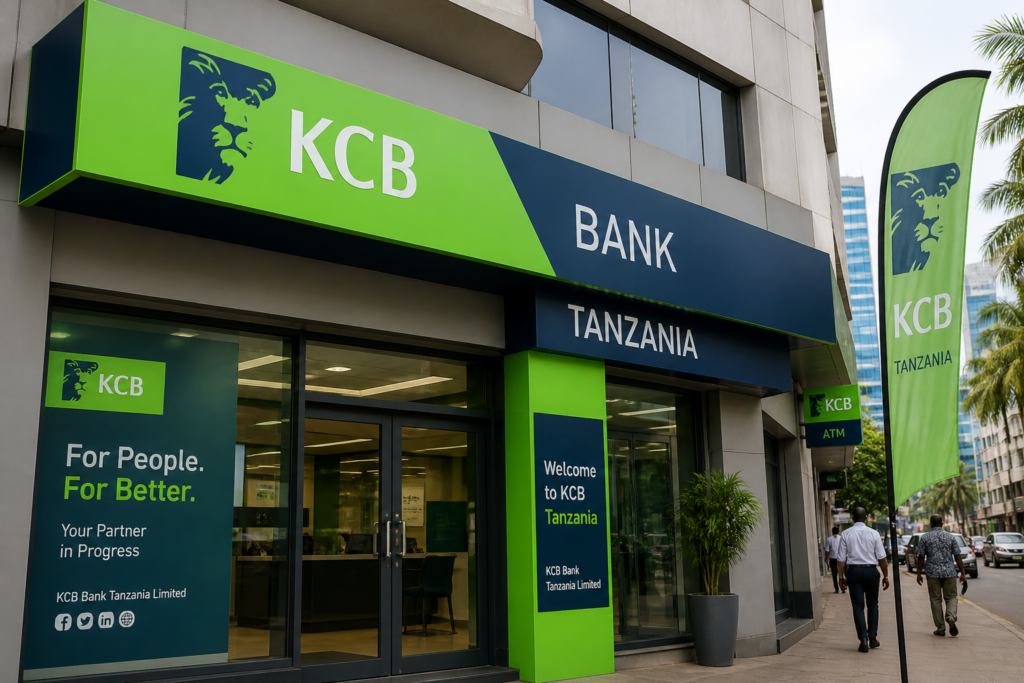
- KCB’s net interest income rose significantly, driving profit growth.
Across Africa, banking profits surged due to:
- Loan repricing.
- Higher yields on assets.
- Strong margins above global averages.
Translation:
The environment favoured lenders—and Kenyan banks executed perfectly.
2. Regional Expansion: Profit Beyond Kenya.

Kenyan banks are no longer just Kenyan.
They are regional financial empires.
- Equity earns over 50% of its profits outside Kenya.
- KCB generates ~31% of profit from regional subsidiaries.
Key markets:
- Democratic Republic of Congo (DRC).
- Uganda.
- Tanzania.
- Rwanda.
- South Sudan.
Example: Equity’s DRC unit alone delivered KSh 24.7 billion profit contribution.
Insight:
Kenya is no longer the ceiling, it is the launchpad.
3. Digital Transformation: Banking Without Branches.

Kenya leads Africa in digital banking innovation.
The result?
- Lower costs.
- Higher transaction volumes.
- Mass financial inclusion.
Key evidence:
- Over 99% of KCB transactions are now digital/non-branch.
Digital platforms like:
- Mobile apps
- Agency banking
- USSD services
…have fundamentally changed banking economics.
Why this matters:
- Fewer branches = lower cost-to-income ratios.
- More users = exponential revenue scaling.
Strategic winner: NCBA Group (via digital lending platforms like M-Shwari ecosystem).
4. Deposit Growth: Cheap Money, Strong Margins.

Banks made money not just from lending, but from how cheaply they raised funds.
- Co-op Bank leveraged SACCO-linked deposits.
- Retail-focused banks built low-cost deposit bases.
Result:
- Strong net interest margins.
- Stable liquidity even in tight conditions.
Evidence: Co-op Bank’s net interest income rose 22% to KSh 62.9 billion.
Insight:
The cheapest money wins in banking and Kenyan banks mastered this.
5. Operational Efficiency: Doing More With Less.

Efficiency became a key differentiator.
- KCB cost-to-income ratio: ~42%.
- Equity: ~51%.
Lower cost structures were driven by:
- Automation.
- Digital channels.
- Reduced physical infrastructure.
Outcome:
Higher profits without proportional cost increases
6. Diversified Income Streams: Beyond Lending

The best-performing banks were not dependent on loans alone.
They expanded into:
- Fees & commissions,
- Forex trading,
- Insurance,
- Transaction services.
Example: I&M grew fee income 31% YoY.
Banks like:
- Absa Bank Kenya.
- Co-operative Bank of Kenya.
…were better insulated because of diversification.
7. Balance Sheet Strength: Scale Advantage

Size matters in banking and Kenya’s top banks are massive.
- KCB assets: ~KSh 2.15 trillion.
- Equity assets: ~KSh 1.97 trillion.
Large balance sheets allow:
- Bigger lending capacity,
- Stronger resilience,
- Lower funding costs.
Insight:
Scale compounds advantage in banking.
8. Risk Management: Profits Despite NPL Pressure.

Even with rising Non-Performing Loans (NPLs):
- Banks maintained profitability.
- Provisions were controlled.
Reality:
- Loan impairments increased slightly.
- But were absorbed by strong income growth.
Golden Insight: Why Kenya Outperformed

Kenya’s banking sector is not just strong: it is structurally superior within Africa.
It combines:
- High interest rate advantage.
- Digital leadership.
- Regional expansion.
- Strong governance.
- Deep financial inclusion.
This is why:
Kenyan banks are among the most profitable in Africa, with returns above global averages.
Outlook: Can This Performance Continue?

2026–2027 will test sustainability. Emerging risks:
- Falling interest rates,
- Rising credit defaults,
- Regulatory pressure.
In fact: Analysts already warn that “easy earnings” may be over.
The next winners will be banks that:
- Innovate digitally,
- Manage risk tightly,
- Expand regionally,
- Build non-interest income.
Conclusion: A Sector That Has Arrived
Kenya’s banks have crossed a critical threshold.
They are no longer:
- Local lenders
- Or traditional institutions
They are now:
Regional financial powerhouses driving Africa’s economic future.
And in 2025, they proved it, with numbers that cannot be ignored.

Leave a Reply