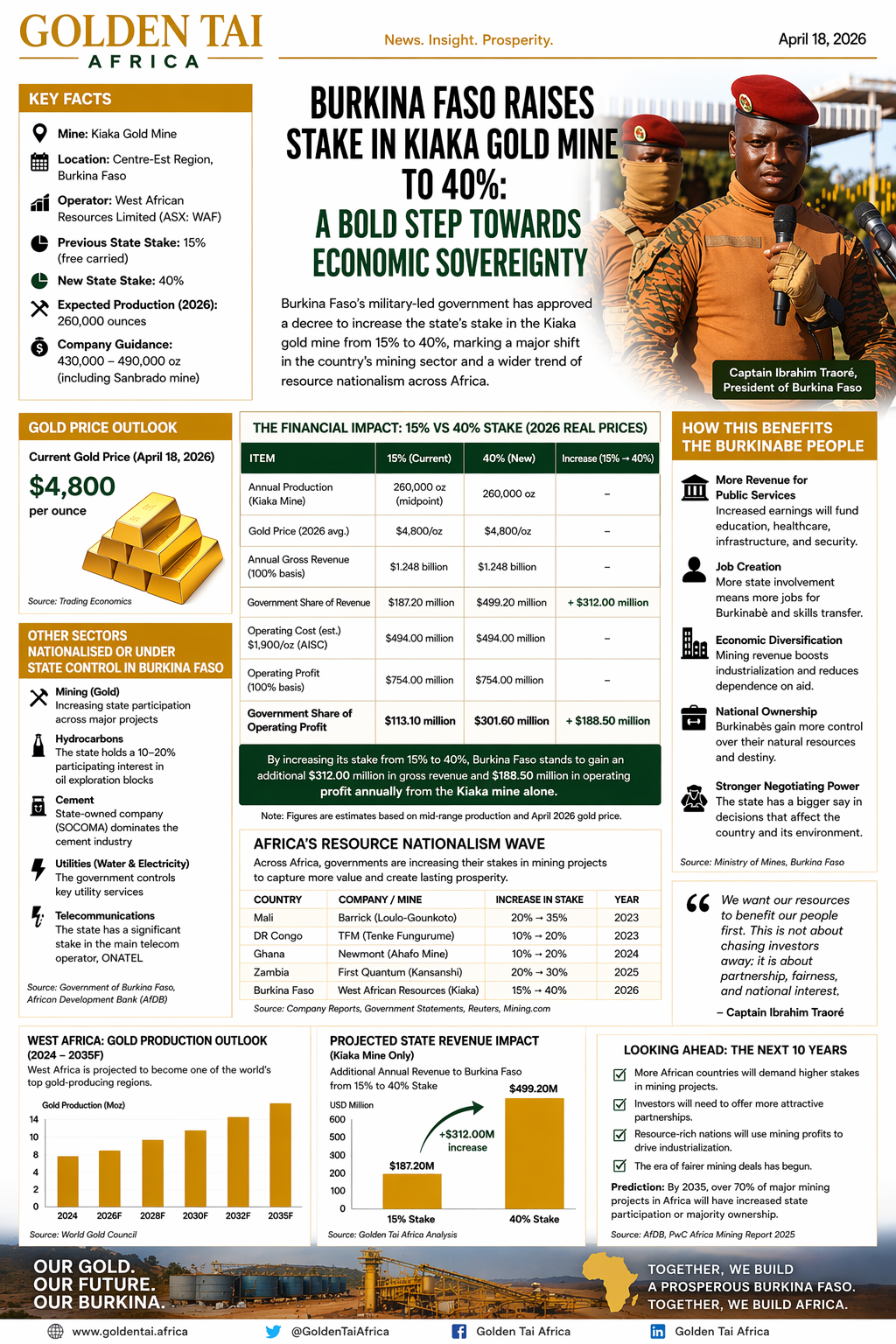
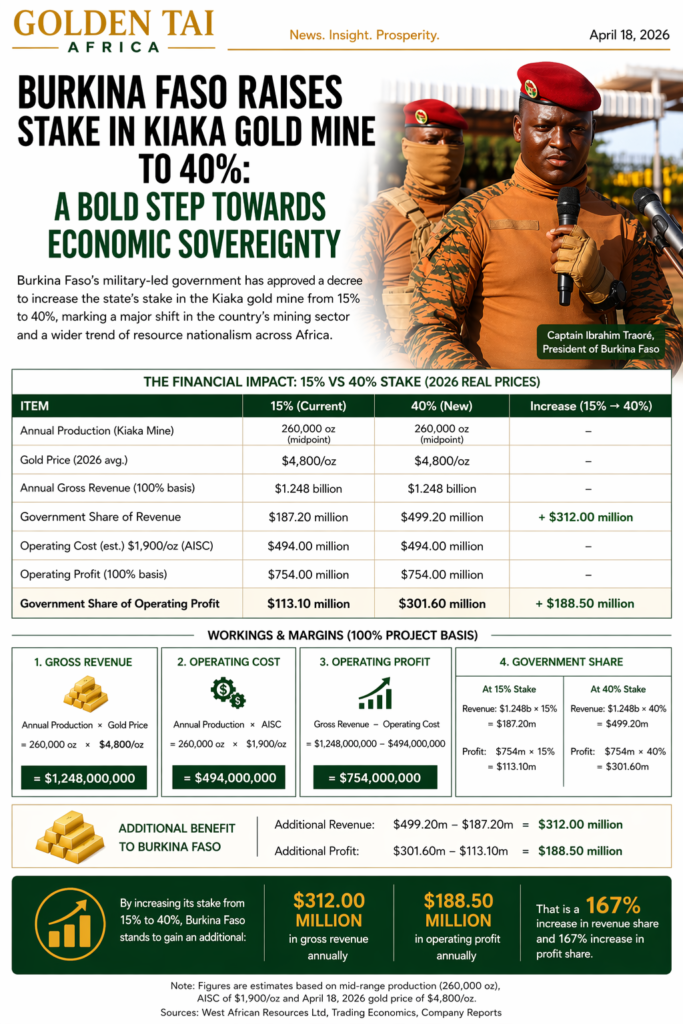
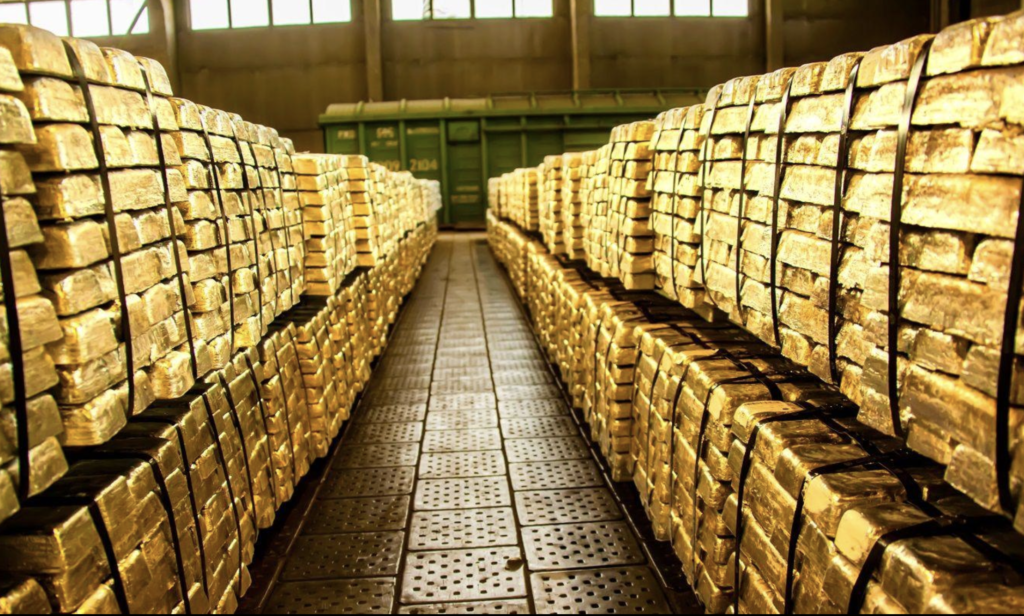
Burkina Faso has taken a bold and calculated step in reshaping its economic future. In a government decree, the state has increased its stake in the Kiaka gold mine from 15% to 40%, a move that signals more than policy; it signals intent. Intent to control. Intent to earn. Intent to redefine Africa’s relationship with its own resources.
This is not an isolated decision. It is part of a rising wave of resource nationalism across Africa, where governments are demanding a bigger share of the wealth generated from their land.
The Numbers Behind the Decision (Kiaka Mine).
Let’s break it down using the actual production and market assumptions:
Key Assumptions (2026)
- Annual production: 260,000 ounces.
- Gold price: ~$4,800 per ounce
- Production cost (AISC): ~$1,900 per ounce
1. Total Revenue (100% Mine)
260,000×4,800=1,248,000,000
≈ $1.25 BILLION annually.
2. Total Operating Cost
260,000×1,900=494,000,000
≈ $494 million.
3. Operating Profit
1.248B−494M=754M
≈ $754 MILLION profit per year
Government Share: Before vs After
At 15% Stake
- Revenue share: $1.248B×15%=$187M.
- Profit share: $754M×15%=$113M.
At 40% Stake
- Revenue share: $1.248B×40%=$499M.
- Profit share: $754M×40%=$302M.
What Burkina Faso Gains (Annual Impact)
- Revenue Gain: +$312 MILLION.
- Profit Gain: +$189 MILLION
Key Insight
A simple policy shift (15% → 40%) delivers:
6x increase in state earnings from the same mine
No new gold discovered.
No new investment required.
Just ownership restructured.
Beyond Gold: What Else Is Being Nationalised?
Burkina Faso is not stopping at gold.
Key sectors under increasing state control:
- Mining (Gold): Increased equity participation in major mines.
- Hydrocarbons: State interests in oil exploration blocks.
- Cement: State-backed dominance via industrial players.
- Utilities (Water & Electricity): Strong government control.
- Telecommunications: Strategic stakes in national operators.
This is a full-spectrum economic positioning strategy, not a one-off move.
Africa-Wide Trend: Resource Nationalism Rising.
Burkina Faso is part of a bigger continental shift:
Examples:
- 🇲🇱 Mali: Increased state stake in gold mines (Barrick operations).
- 🇨🇩 DR Congo: Renegotiating cobalt and copper contracts.
- 🇬🇭 Ghana: Pushing for more value retention in gold sector.
- 🇿🇲 Zambia: Expanding control in copper mining.
Why Governments Are Doing This
- Gold prices are historically high.
- African countries want to:
- Capture more revenue locally.
- Reduce dependency on aid.
- Fund infrastructure and social services.
- Build sovereign wealth.
What This Means for Ordinary Burkinabè
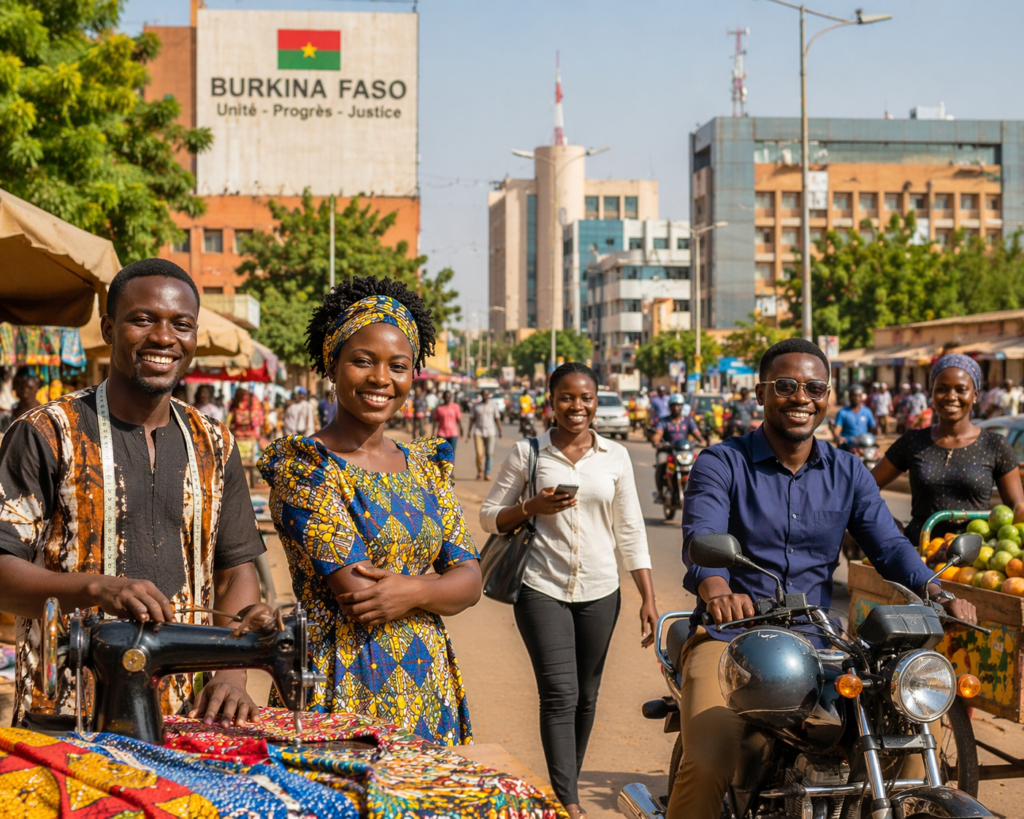
If executed well, this policy could translate into:
1. More Public Revenue
- Funding for:
- Schools .
- Hospitals.
- Roads.
2. Job Creation
- Increased state involvement → local hiring pressure
3. Economic Independence
- Less reliance on foreign capital and aid.
4. Stronger Negotiation Power.
- Future deals become more balanced.
But There Are Risks (Let’s Be Honest)
- Investor confidence may drop.
- Capital flight risk.
- Reduced foreign direct investment.
- Operational inefficiencies if state management is weak.
This is a high-reward, high-responsibility move.
10-Year Outlook (2026–2036).
Likely Scenario:
- More African nations push for 30%–50% ownership.
- Hybrid models emerge:
- Private capital + strong state equity.
- Increased focus on:
- Local processing (value addition).
- Not just exporting raw minerals.
Golden Tai Africa Prediction:
By 2035, over 70% of major mining projects in Africa will have significant state ownership (≥30%)
Final Word
Burkina Faso’s move is not just about gold.
It is about power & Self Value.
It is about control of destiny.
It is about rewriting a long-standing economic story.
For decades, Africa has exported wealth. Now, it is beginning to claim it.
Golden Tai Reflection.
“Rasilimali zetu ni nguvu zetu.”
(Our resources are our power).
Leave a Reply